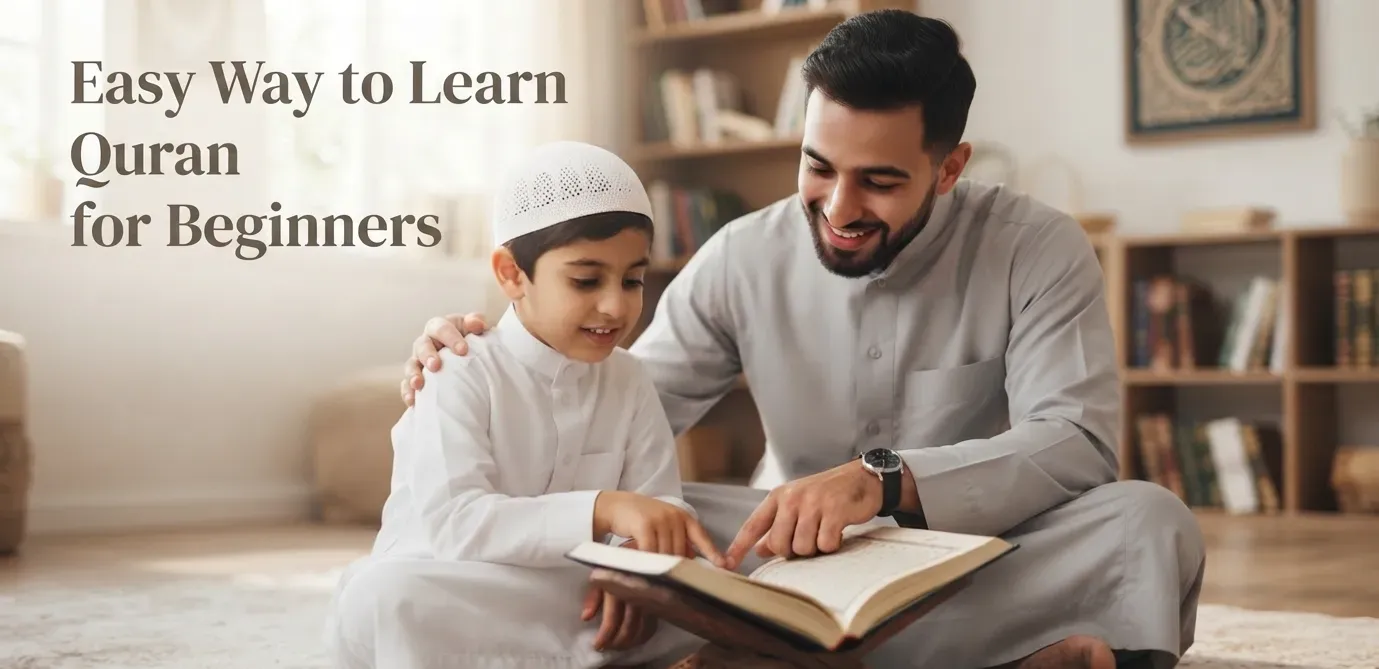
If you are looking for an easy way to learn Quran for beginners, you are not alone. Most beginners feel confused at the beginning, not because learning the Holy Quran is difficult, but because of the abundance of resources, the lack of a clear plan, and the fear of making mistakes in pronunciation and intonation. But the truth is that learning the Quran becomes much easier when you follow organized and clear steps. By dividing the learning journey into simple and gradual stages, any beginner, regardless of their age or level of knowledge of the Arabic language, can start reading with confidence and make continuous progress. In this guide, you will learn about 4 practical and tried steps, which is the approach we recommend to every new student and which we rely on in our educational program to help beginners build a strong foundation in reading and reciting the Holy Quran correctly.
Too many disconnected resources, an unclear order to follow, and quiet self-consciousness about getting it wrong are the three most common reasons beginners stall before they've really started. Following one clear, sequential path — rather than jumping between apps, videos, and books — is what actually makes this the easy way to learn Quran for beginners, instead of a confusing one.
Noorani Qaida is a small, traditional beginner's book used for centuries to teach the Arabic alphabet specifically for Quranic reading. Rather than trying to memorize all 28 letters and their many shapes at once, Noorani Qaida introduces them gradually, alongside the exact pronunciation points (Makharij) needed for correct recitation. This is usually the very first thing a beginner should study, before touching any Quranic text at all — and it's the foundation of every easy way to learn Quran for beginners.
Arabic uses small marks above and below letters — called harakat — to indicate short vowel sounds (like a light "a," "i," or "u" sound). Once you know the letters, learning harakat is what actually lets you start sounding out words, rather than just recognizing individual letters.
Surah Al-Fatiha and the short surahs in Juz Amma (the final, 30th part of the Quran) are the traditional starting point for a reason: they're short, repeated in daily prayers, and give you quick, motivating wins early in your learning journey rather than facing a long, unfamiliar chapter first.
This is the step self-taught beginners skip most often — and it's the one that matters most. Without a teacher listening to you recite, small pronunciation mistakes go unnoticed and become habits that are much harder to unlearn later. A short, regular session with a qualified teacher catches these early, while they're still easy to fix. This is also what separates a genuinely easy way to learn Quran for beginners from a self-taught path that quietly builds bad habits.
Week | Focus | Daily Time |
Week 1 | Learn Arabic letters and basic sounds using Noorani Qaida | 15–20 minutes |
Week 2 | Add harakat (vowel marks); sound out simple 2–3 letter combinations | 15–20 minutes |
Week 3 | Read Surah Al-Fatiha slowly, letter by letter, with teacher correction | 15–20 minutes |
Week 4 | Add 1–2 short surahs from Juz Amma; continue daily practice | 15–20 minutes |
This plan is intentionally light — 15–20 minutes a day is enough to build real, lasting progress without burning out, which is exactly what makes it a realistic easy way to learn Quran for beginners with a full-time schedule.
By the end of a consistent first month, most beginners can recognize all Arabic letters in their different joined forms, sound out short words with harakat, and read Surah Al-Fatiha with basic accuracy under a teacher's guidance. Confidence at this stage is usually still developing — this is completely normal, and it's the point where a second month focused on expanding to more short surahs typically brings a noticeable jump in fluency.
Once reading fluency is established through this beginner path, the natural next steps are structured Tajweed study and, for many students, memorization of additional surahs. Our Learn to Read Quran course follows exactly this four-step sequence, with a placement assessment on our beginner curriculum page to confirm you start at the right point if you already have some prior exposure.
Aspect | Traditional In-Person Madrasa | Online 1-to-1 (This Method) |
Core sequence | Letters → harakat → short surahs → correction | Same core sequence |
Scheduling | Fixed class times | Flexible, student-led |
Individual correction time | Shared across a group | Full 1-to-1 attention |
Best fit for | Children in group settings | Adult beginners, working schedules |
The core sequence — letters, harakat, short surahs, corrected recitation — is the same one traditionally used in in-person madrasa settings. What changes online is flexibility of scheduling and the ability to get one-to-one attention that a larger in-person class might not offer. For adult beginners specifically, this one-to-one online format provides more individual correction time than an in-person group class would — arguably making it the easy way to learn Quran for beginners for anyone with limited time.
Suppose you're learning alongside a spouse or as a parent modeling the habit for children. Keeping practice light and low-pressure matters more than involving others for accountability's sake. A simple, private daily habit — without turning early, imperfect attempts into a family event — tends to sustain motivation better in the first few weeks, when mistakes are most common and self-consciousness is highest.
No shortcut skips these steps, but there's also no need to make it harder than it is. Letters, then vowels, then short surahs, then correction from a real teacher — followed consistently for even a few weeks — will take you further than most people expect. If you've been looking for the easy way to learn Quran for beginners, this four-step sequence is it: beginners rarely need more time than they think; they usually just need a clearer order to follow. If you'd like structured guidance with a qualified teacher, our beginner program follows the same step-by-step approach explained in this guide.
What is the easy way to learn Quran for beginners?
The easy way to learn Quran for beginners is a clear, four-step sequence: learn the Arabic alphabet through Noorani Qaida, add harakat (vowel marks), start reading short surahs like Al-Fatiha, and get regular pronunciation correction from a qualified teacher.
What is the first thing a beginner should learn in Quran?
The first step is learning the Arabic alphabet and its correct pronunciation points, traditionally taught through a beginner's text called Noorani Qaida, before attempting to read any Quranic verses.
Can adults learn to read Quran from scratch?
Yes. Adults learn to read the Quran from zero all the time, and often progress faster than children because they can understand explanations of rules rather than relying purely on repetition.
How long does it take a beginner to read Quran fluently?
With consistent short daily practice (15–20 minutes), most adult beginners can read basic Quranic text within 2–4 months, though full fluency and confidence with Tajweed rules typically takes longer.
Do I need to buy a specific book to start, like Noorani Qaida?
A Noorani Qaida text is the traditional and widely recommended starting resource, though a qualified teacher can also guide you through the same letter-by-letter sequence without it being strictly mandatory.
Is it normal to still feel hesitant after the first month?
Yes — reading fluency and confidence typically develop at slightly different speeds, and most students continue building confidence naturally through the second and third months of consistent practice.
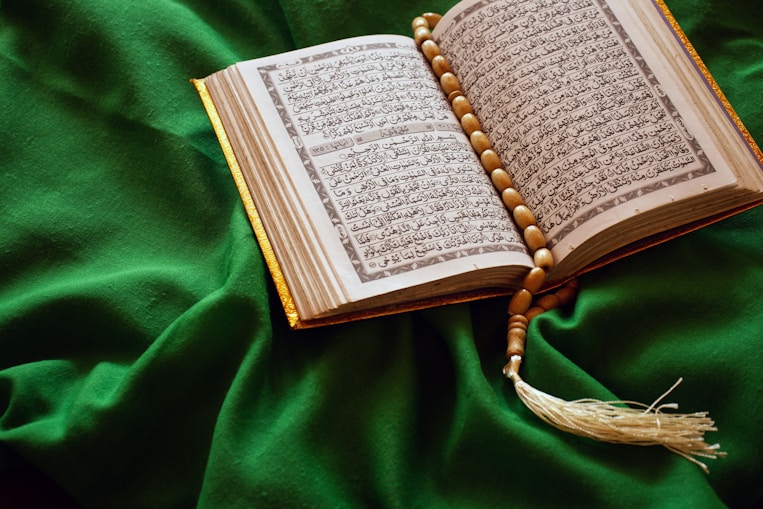
Das Auswendiglernen des Korans ist eine zutiefst lohnende spirituelle Reise, erfordert aber auch Hingabe, Beständigkeit und wirksame Strategien. Hier sind 10 Tipps, die dir dabei helfen.
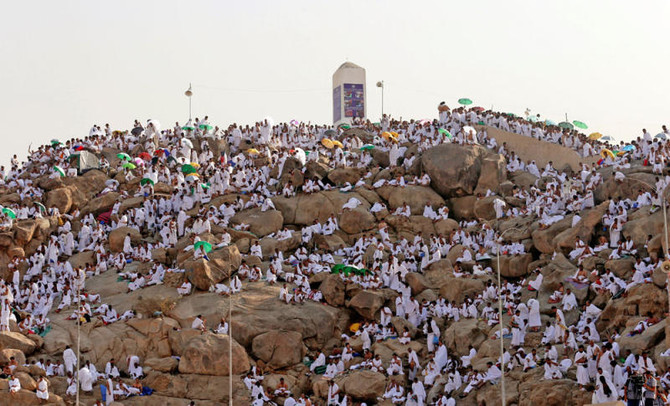
Der Tag von Arafah (Yawm Arafah) ist der 9. Tag des islamischen Monats Dhu al-Hijjah und einer der bedeutendsten Tage im islamischen Kalender. Er geht dem Eid al-Adha voraus und hat große Bedeutung für Pilger sowie für Muslime weltweit. Für die Pilger ist es der Höhepunkt der Hadsch, an dem sie sich auf der Ebene von Arafat versammeln, um zu beten und zu flehen. Für Nicht-Pilger ist es ein Tag des Fastens und des Suchens nach Allahs Vergebung und Barmherzigkeit. Es wird geglaubt, dass das Fasten an diesem Tag die Sünden des vergangenen und des kommenden Jahres tilgt.
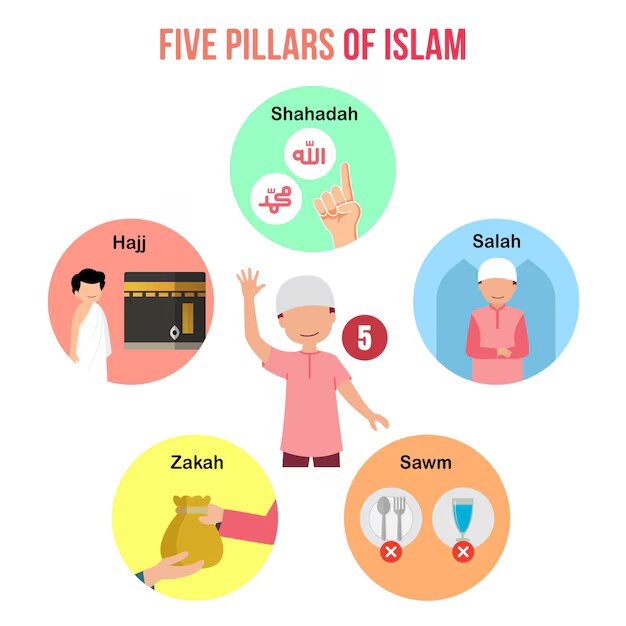
Die fünf Säulen des Islam bilden das wesentliche Fundament des Glaubens und der Praxis eines Muslims. Diese Pflichten stärken das tägliche Leben, vertiefen die Verbindung zu Allah und leiten dazu an, nach den Lehren des Islam zu leben. Die Einhaltung der fünf Säulen schenkt den Muslimen ein tiefes Gefühl von Glauben und Einheit, Werte, die ihrem Leben Sinn und Zweck verleihen.
